 Skip to content

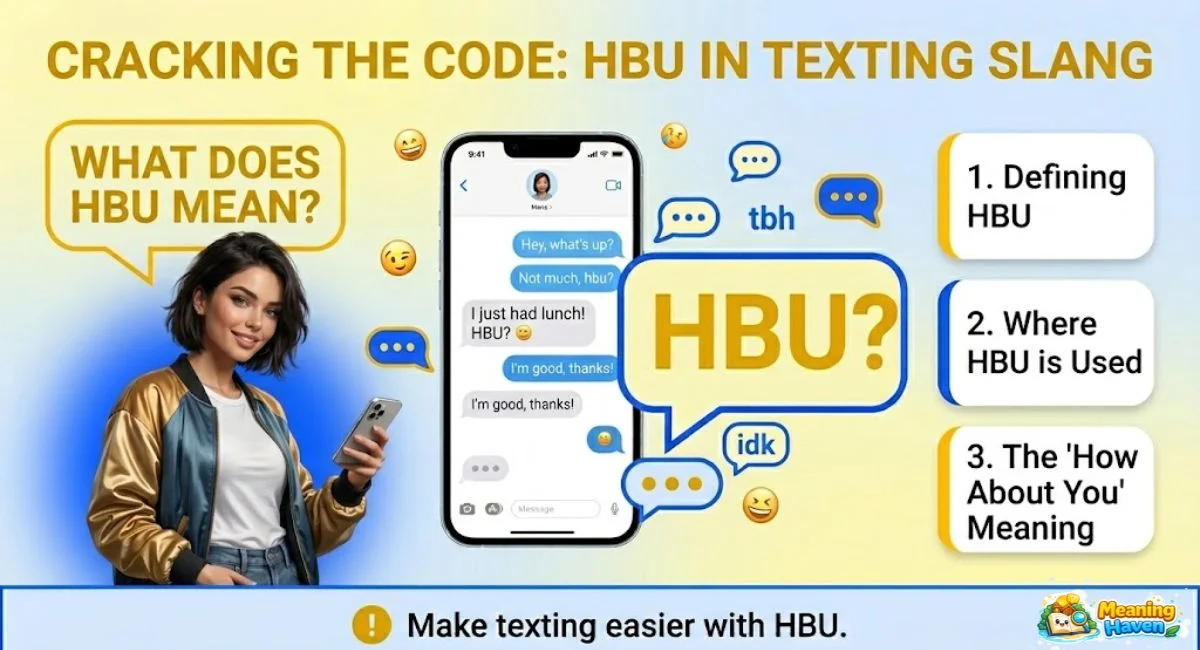
Have you ever been in a conversation with a friend, only to be hit with an acronym you don’t understand? It’s frustrating, right? Especially when texting abbreviations are everywhere—HBU, WBU, LOL, and more. You’re left wondering whether you’re the only one who doesn’t know what’s going on. But here’s the thing: you’re not alone. HBU (How About You?) is one of the most commonly used abbreviations in online chats, and many people are unsure about its meaning, especially when they’re new to texting slang.
I’ve been there too—trying to keep up with digital conversations and feeling lost when I came across a new acronym. As someone who’s spent years studying online communication trends and digital slang, I can tell you that understanding abbreviations like HBU is essential for staying engaged and participating in casual chats online. In this article, I’ll walk you through everything you need to know about HBU—its meaning, origin, and how to use it confidently in your conversations.
Origin of HBU in Chat Slang
The phrase “How About You?” has been around for a long time, but as texting became more popular, people started shortening it to just HBU. This abbreviation became widely used in online chats, especially among younger people and those who prefer quick, easy communication.
The rise of texting and chat applications like SMS, WhatsApp, and social media platforms has made these types of abbreviations more common. Since texting on early mobile phones cost money per message, people began shortening words to save space and money.
Why do people use abbreviations like HBU?
- Ease of Communication: Using HBU helps keep the conversation flowing faster and more efficiently. This is especially important for Gen Z and Millennials who prefer quick communication over long text exchanges.
- Friendly Tone: Abbreviations like HBU help keep the chat light, informal, and friendly. It creates a conversational, casual atmosphere in chats, especially between friends or peers.
HBU Full Form Examples in Chatting

To help you understand how to use HBU, here are some examples in real conversations:
- Person 1: “I just had a great weekend, went hiking.”
Person 2: “Sounds fun! HBU?” - Person 1: “I’m planning to grab lunch with some friends later.”
Person 2: “Nice! HBU?”
These examples show how HBU is used to ask the other person about their activities or thoughts. It shows interest in the other person’s life and helps keep the conversation flowing.
For college students or young adults in group chats or casual conversations, HBU is a quick and efficient way to keep things moving.
How People Use HBU in Conversations
HBU is a great way to ask someone what they’re up to, especially in casual conversations. It’s most commonly used in informal settings, like texting between friends, social media comments, or even in group chats.
While it is friendly and casual, HBU is typically not used in formal conversations, such as emails or work-related discussions. It’s important to know when it’s appropriate to use it. This is particularly important for college students or those new to online texting culture who might still be learning when abbreviations are appropriate.
Pro Tip: Stick to HBU in informal situations, like chatting with friends or texting on social media. It’s great for keeping conversations going without sounding too formal.
Difference Between HBU and Similar Short Forms
You might have seen other short acronyms like WBU or WYD. Here’s how they compare to HBU:
- HBU = “How About You?” (Asking the other person about their opinion or situation)
- WBU = “What About You?” (Used in a similar way, but can be more general)
- WYD = “What You Doing?” (Used to ask someone about what they’re currently doing)
- HBY = “How ‘Bout You?” (Another variation of “How About You?”)
Each of these abbreviations can be used in casual conversations, but HBU is often preferred when you want to keep things friendly and simple. For Gen Z and Millennials, using HBU can help them keep up with current texting trends and maintain the casual tone they prefer.
HBU Full Form in Other Contexts
While HBU is mainly used in texting, it can have different meanings in other areas:
- Highest and Best Use: In real estate, HBU refers to the most profitable use of a piece of property. This is a common term in property appraisal.
- Houston Baptist University: Some may also use HBU to refer to this university. However, this is less common in casual chats and more relevant in educational contexts.
- Heat Build Up: Sometimes HBU is used in scientific or engineering fields to refer to heat build-up in a system. But, for the most part, this meaning doesn’t come up in everyday conversations.
While these meanings are not typically used in casual chats, they highlight the different contexts where HBU can apply. This section adds an extra layer of understanding that will benefit curious readers looking to expand their knowledge of the abbreviation.
| Abbreviation | Full Form | Used In | Tone | Example |
|---|---|---|---|---|
| HBU | How About You? | Casual conversations, group chats | Friendly, casual | “I just had lunch! HBU?” |
| WBU | What About You? | Casual conversations | General, but casual | “I’m studying. WBU?” |
| WYD | What You Doing? | Casual conversations, social media | Casual, inquiry | “WYD this weekend?” |
| HBY | How ‘Bout You? | Informal conversations | Casual, laid-back | “I watched a movie, HBY?” |
More Examples in Different Contexts
To give you a clearer idea of how HBU can be used in various situations, here are some additional examples:
- Workplace Scenario:
Person 1: “I finished the report and sent it over to the client.”
Person 2: “Great job! HBU?” - Romantic/Flirty Context:
Person 1: “Dinner was amazing tonight. I had such a great time.”
Person 2: “Me too! HBU?”
These examples show how HBU can be used in different tones—whether professional or personal.
Psychology Behind HBU
Why do people use abbreviations like HBU in text? Here are some reasons:
- Ease of Communication: People often shorten phrases like How About You? to save time and keep the conversation flowing.
- Friendly and Informal Tone: Using HBU signals that you’re interested in the other person’s opinion or life in a casual way. It helps keep the conversation light and friendly, showing a desire to continue the interaction without sounding too formal.
Understanding the psychology of these abbreviations helps you use them more effectively in your chats.
Interactive Element (Related Slang)
While HBU is commonly used, you might also come across other similar slang terms. Here’s a quick comparison:
- HBU = “How About You?” – Used to ask about the other person’s thoughts or actions.
- WBU = “What About You?” – Often used interchangeably with HBU, but it can feel more general.
- WYD = “What You Doing?” – Used to ask someone about their current activity.
- HBY = “How ‘Bout You?” – A slight variation of HBU, used in the same way but a bit more casual.
These similar slang terms are often used depending on the tone of the conversation. You can mix them up based on the situation!
Takeaways
- HBU stands for “How About You?” and is widely used in texting and online chats to ask someone about their thoughts or actions.
- HBU is a casual, informal abbreviation, and should be used in friendly, casual conversations—not professional settings.
- The use of HBU is common among Gen Z and Millennials, especially on social media platforms like Snapchat, Instagram, and TikTok.
- Alternatives to HBU include WBU (What About You?), WYD (What You Doing?), and HBY (How ‘Bout You?), but HBU is the most widely recognized.
- Make sure to use HBU in the right context to keep conversations light and friendly.
Final Thoughts
When I first came across abbreviations like HBU, I felt lost. I was in college, constantly texting friends and trying to keep up with the latest slang. But, as I kept researching and learning about online communication, I realized that these abbreviations aren’t just shortcuts—they’re an integral part of modern digital conversations. Understanding them has helped me navigate chats more smoothly and stay connected with friends, colleagues, and even new acquaintances.
As a digital communication expert, I’ve seen firsthand how knowing texting slang like HBU can enhance your conversations. It shows that you’re not only aware of the latest trends but also that you’re participating in a shared language that connects people across the globe. So, whether you’re a teenager trying to keep up with your friends or someone who wants to stay relevant in online chats, understanding HBU will make your communication smoother, faster, and more enjoyable.
FAQ’s
1. What does HBU stand for in texting?
HBU stands for “How About You?” It’s used in casual conversations to ask someone about their thoughts or activities.
2. Where is HBU typically used?
HBU is typically used in texting, social media, and online chats, especially among friends and family.
3. Is HBU considered informal?
Yes, HBU is informal and should not be used in formal settings like work emails or official messages.
4. Is HBU rude or inappropriate?
No, HBU is not rude. It’s a friendly and casual way to ask someone about their day or thoughts.
5. Can HBU appear in group chats or plural messaging?
Yes, HBU can easily be used in group chats or conversations with multiple people.
6.Is HBU used only in the USA?
While HBU is popular in the USA, it is also used in other English-speaking countries, particularly among younger generations who are familiar with texting slang.
7.Is HBU considered rude?
No, HBU is not rude. It’s a casual way of showing interest in the other person’s thoughts or activities. However, it’s best used in informal settings.

Welcome to Meaning Haven, I’m Muhammad Talha, a content writer and SEO specialist passionate about simplifying word meanings and modern language.
I help readers understand meanings, explore trending slang, and communicate with clarity. My goal is to make language easy, relatable, and useful for everyone.
Let’s explore meanings together!