 Skip to content

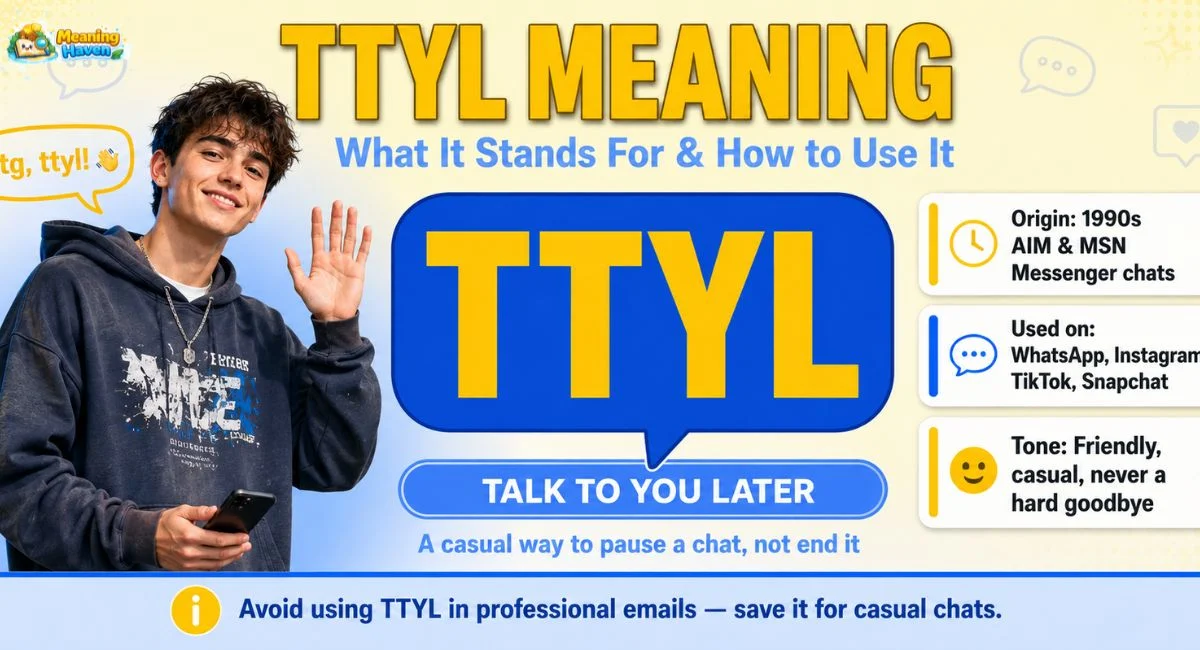
You’re texting a friend. The conversation is fun. Then real life calls. You need to go, but don’t want to sound rude. So you type three little letters: TTYL. Your friend smiles back and replies the same way right away. No drama, no long goodbye, just a quick, friendly sign-off that keeps the door open for later.
This little phrase shows up everywhere, from group chats to Instagram comments to dating app conversations. But what does TTYL mean exactly, and where did this casual texting slang come from? This guide breaks down the full TTYL meaning, its history, and how to use it naturally across every app you check daily.
What Does TTYL Mean? (Quick Definition)
What does TTYL mean? TTYL stands for “talk to you later.” It’s a short way to end a chat without sounding cold or final. People use it when they need to step away but still want to keep the conversation going another time.
This little phrase is technically a TTYL initialism, which means each letter stands for a word, and you say the letters out loud rather than blending them into one sound. The TTYL full form is simple: T-T-Y-L becomes “talk to you later.” You’ll see it written a few different ways too. Some people type it in all caps as TTYL. Others go lowercase with ttyl. And every now and then, you’ll spot the formal version, T.T.Y.L., with periods between each letter. All three mean the exact same thing, so don’t worry about which one is “correct.”
Origin and History of TTYL
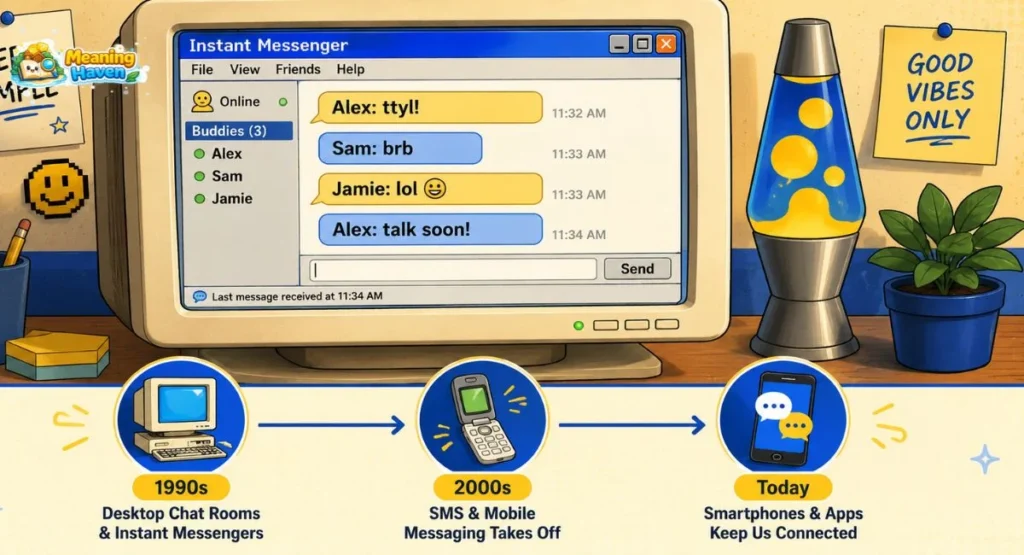
Every piece of slang has a backstory, and TTYL history is more interesting than you’d expect. The origin of TTYL traces back to the early days of instant messaging, long before smartphones existed. Programs like AOL Instant Messenger, MSN Messenger, and ICQ ruled teenage bedrooms and college dorm rooms in the late 1990s and early 2000s. People typed fast, multitasked between chat windows, and needed quick ways to wrap up conversations.
Texting added fuel to the fire. Early phones charged by the character, and SMS plans capped messages at 160 characters. Every letter mattered. Abbreviations like TTYL helped people save time and money in one move. As texting habits grew, this shorthand carried over from desktop screens to tiny phone keypads, and it stuck around even after smartphones made full sentences easy to type. The phrase didn’t fade with new technology. Instead, it adapted. Digital communication trends show that TTYL simply moved from instant messengers to texting, then again into social media DMs, proving that some habits are just too convenient to drop.
Fun fact: some people jokingly connect TTYL to older slang like British English ta ta you all, a playful goodbye phrase from decades past. There’s no solid historical link between the two, but the coincidence is fun to bring up at trivia night.
How to Use TTYL in Different Contexts
Knowing when to use TTYL matters just as much as knowing what it means. Context changes everything. A phrase that sounds friendly between two best friends might sound oddly casual in a work email. So let’s break down exactly how to use TTYL depending on where you are and who you’re talking to.
Casual Texting & Chat Apps
This is where TTYL feels most natural. Between friends, family, or partners, it works as a relaxed way to pause a conversation. Picture this exchange: “Gotta jump in the shower, ttyl!” followed by “okay, ttyl!” Nobody overthinks it. Nobody feels brushed off. It’s simply a low-pressure way to say “we’re not done talking, just taking a break.”
Social Media (Instagram, TikTok, Snapchat)
TTYL also pops up constantly across TTYL in social media spaces. You might see it in a comment thread, in a caption, or tucked into a direct message. Because social platforms are more public-facing than private texts, people often soften TTYL with an emoji or two, like a wave or a laughing face, to keep the tone light and friendly.
Professional & Workplace Settings (and why it’s usually discouraged there)
Things shift in the workplace. TTYL reads as too breezy for client emails, manager check-ins, or formal Slack channels. It can come across as dismissive, even if that’s not the intention. Professional settings usually call for phrases like “I’ll follow up shortly” instead, which sound polished while still being friendly.
TTYL Meaning on Specific Platforms
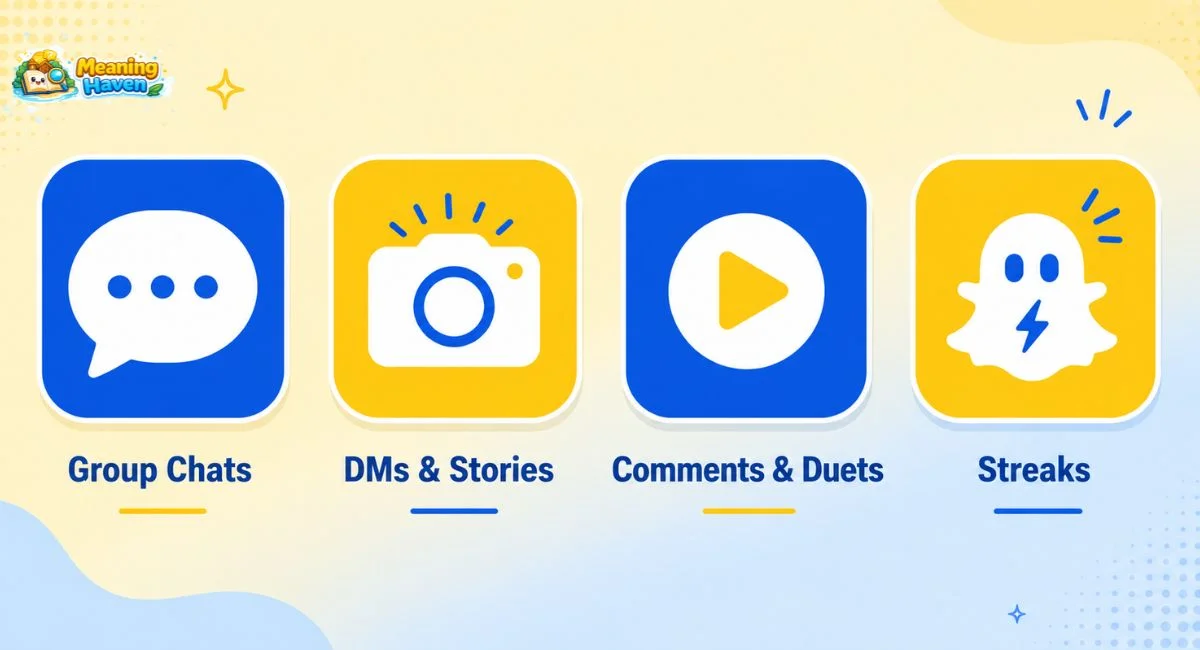
Different apps shape how people use slang, and TTYL is no exception. While the meaning never changes, the vibe and timing shift slightly depending on where you’re typing. Let’s look at how it shows up across the apps people use every single day.
It’s also worth noting that even though it started in instant messengers, TTYL on Facebook and other older platforms helped cement it into everyday internet language. Today, you’ll find it just as often on newer apps as you do in classic text threads.
WhatsApp conversations, especially group chats, use TTYL constantly. It’s a natural way to step out of an active thread without making a big announcement. People often pair it with their “last seen” status quietly going dark right after.
TTYL on Instagram usually shows up in DMs and Story reply threads. It’s a casual closer after a back-and-forth chat, especially when two people have been replying quickly and need a natural stopping point.
TikTok
TikTok comment sections move fast, and TTYL fits right in. People use it in duets, replies, or comment chains, sometimes seriously and sometimes as a joke, especially when a conversation turns into a string of funny replies.
Snapchat
Snapchat culture leans heavily on streaks and constant back-and-forth, so TTYL here often means “I’ll snap you later” rather than a full goodbye. It keeps the connection alive without demanding an instant reply.
| Platform | Common Use | Typical Tone |
| Ending a group or 1:1 chat | Casual, friendly | |
| DMs and Story replies | Light, social | |
| TikTok | Comments and duets | Playful, sometimes joking |
| Snapchat | Before a gap in snapping | Quick, streak-friendly |
While TTYL on Twitter isn’t as common as it once was, it still appears occasionally in quick reply threads, usually among people who already know each other well.
Other Meanings of TTYL (Outside Texting)
Most people searching this phrase want the texting definition, and that’s perfectly reasonable since it covers the vast majority of real-world use. Still, a few other fields borrow the same four letters for completely unrelated purposes, and it’s worth knowing they exist so you’re never caught off guard.
In physics or general science discussions, similar letter combinations occasionally appear in shorthand notes, though this isn’t standardized and varies by classroom or textbook. Medical charting sometimes uses overlapping acronyms too, though again, nothing official ties them to texting slang. Aviation paperwork has its own dense world of acronyms, and letter overlaps happen simply because the alphabet is limited and industries reuse combinations constantly. None of these meanings connect to the friendly “talk to you later” you’ll find in texting, so don’t worry about mixing them up in daily conversation.
How to Respond to TTYL
Responding to TTYL doesn’t require much thought, but a little awareness goes a long way. A simple “okay, talk soon” or a quick “ttyl!” right back keeps the tone warm and matched. Even a simple thumbs-up emoji works perfectly fine in most casual chats.
Tone matters here. If someone sends TTYL with extra warmth, like an exclamation point or a heart emoji, mirroring that energy feels natural and friendly. If their message feels rushed or short, there’s no need to read too much into it. Sometimes TTYL doesn’t even need a reply at all. It often works as a natural endpoint, similar to a polite nod at the end of a face-to-face chat. Forcing a response when none is needed can actually feel more awkward than just letting the conversation rest.
TTYL vs. Similar Texting Abbreviations
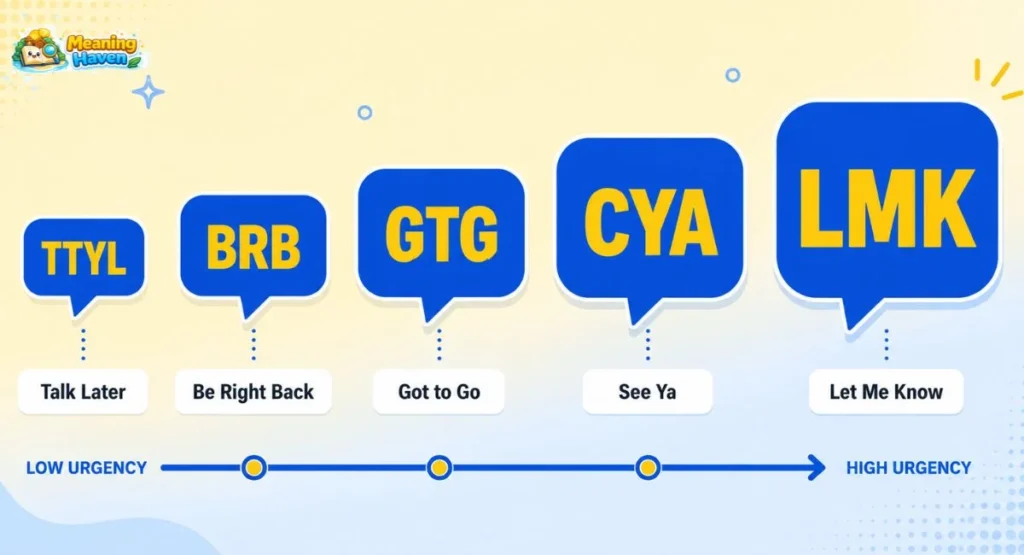
TTYL isn’t alone in the world of quick sign-offs. Dozens of similar abbreviations exist, each with slightly different timing and tone. Understanding alternatives to TTYL helps you pick the right phrase for the right moment, instead of accidentally sending mixed signals.
Some close cousins include TTYLS meaning “talk to you later, sweetie,” a slightly more affectionate version often used between close friends or partners. TTYL8R meaning is just a stylized way of writing the same phrase, swapping “later” for “l8r” in classic early-2000s texting fashion. TTUL meaning mirrors TTYL almost exactly, just missing the “y,” and still means “talk to you later.” TTYIAF meaning stands for “talk to you in a few,” signaling a much shorter break than standard TTYL. TTYS meaning translates to “talk to you soon,” implying a quicker reconnect than TTYL usually suggests.
Beyond the TTYL family, other abbreviations for goodbye carry their own specific flavor. BFN meaning stands for “bye for now,” a soft, open-ended farewell. BBFN meaning expands that to “bye-bye for now,” adding a touch more warmth. BRB meaning is “be right back,” used for short breaks within an ongoing chat. GTG meaning translates to “got to go,” which feels more abrupt and final than TTYL. SYL meaning stands for “see you later,” nearly identical to TTYL in tone. CUL8R meaning is simply a stylized spelling of “see you later.”
| Abbreviation | Meaning | Typical Use Case | Urgency Level |
| TTYL | Talk to you later | Casual sign-off, will reconnect | Low |
| BRB | Be right back | Stepping away briefly, staying in chat | Low |
| GTG | Got to go | Leaving now, more abrupt | Medium |
| CYA | See ya | Casual goodbye, less commitment to reconnect | Low |
| LMK | Let me know | Awaiting a response or decision | Medium |
Choosing between these comes down to timing and tone. TTYL works best when you genuinely plan to reconnect soon but don’t have an exact time in mind. GTG feels more urgent, almost like you’re cutting the chat short. BRB signals you’re not even fully leaving, just stepping away from the keyboard for a moment.
Common Misconceptions About TTYL
A surprising number of people misread TTYL, and clearing up these mix-ups makes everyday texting smoother for everyone involved. The biggest myth is that TTYL signals a long absence. In reality, it usually just means “not right now,” which could mean five minutes or five hours. There’s no fixed timer attached to the phrase.
Generational gaps add another layer of confusion. Older texters sometimes interpret TTYL as more formal or final than younger texters intend, simply because they didn’t grow up surrounded by this kind of internet messaging slang. It helps to remember that tone rarely transfers perfectly through text, so giving people the benefit of the doubt avoids unnecessary awkwardness. Most importantly, TTYL is not the same as ghosting. Ghosting means cutting off contact with no explanation at all. TTYL, on the other hand, is an open door, not a closed one. It’s a pause button, not an off switch, and treating it that way keeps conversations feeling light instead of loaded with unspoken meaning.
TTYL in Modern Digital Communication & Dating Apps
Dating apps have given TTYL a whole new life. Early-stage conversations on these platforms often move in short bursts, and TTYL helps pace things out without feeling like a rejection. Sending it can genuinely mean “I’m into this and I’ll be back,” especially when paired with warm language or a reason for stepping away.
That said, context shapes how it lands. A bare TTYL with zero explanation can sometimes feel like a soft exit, particularly if the conversation suddenly cools off right after. Pairing TTYL with a small reason, like “ttyl, about to hop into a meeting,” reads far warmer than leaving someone guessing. Overusing it without much effort elsewhere in the conversation can also come across as low-investment, so it works best as a friendly transition rather than a constant crutch. Used thoughtfully, though, TTYL remains one of the easiest casual ways to say goodbye in the entire dating app world.
Frequently Asked Questions
Is TTYL formal or informal? TTYL is strictly informal. It belongs in TTYL in text messages and casual chats, not in professional writing, cover letters, or formal emails.
Is TTYL still used in 2026, or is it outdated? TTYL remains common, especially in TTYL in SMS texting and casual messaging apps. Some younger texters lean toward emojis or GIFs instead, but TTYL hasn’t disappeared at all.
Can you use TTYL in professional emails? Generally, no. Workplace messages call for clearer, more polished phrasing, even in quick internal chats.
What’s a better alternative to TTYL at work? Try phrases like “I’ll follow up later,” “speak soon,” or “catching up after this meeting.” These keep things professional while still sounding warm and approachable.
Conclusion
TTYL might be just four letters, but it carries real conversational weight. It started in early instant messengers, survived the rise of texting, and now thrives across nearly every social platform people use today. Whether you’re texting a best friend, chatting on Snapchat, or wrapping up a dating app conversation, TTYL offers a quick, friendly way to pause without slamming the door shut.
Understanding TTYL examples, TTYL usage examples, and the many similar common texting acronyms around it helps you communicate clearly and confidently across every app you use. So next time a conversation needs a natural pause, go ahead and type those four familiar letters. Talk to you later.

Welcome to Meaning Haven, I’m Muhammad Talha, a content writer and SEO specialist passionate about simplifying word meanings and modern language.
I help readers understand meanings, explore trending slang, and communicate with clarity. My goal is to make language easy, relatable, and useful for everyone.
Let’s explore meanings together!