 Skip to content


I still remember when a coworker first changed their status on Slack using the abbreviation WFH with a tiny emoji of a house — that moment made me pause and learn the real meaning behind this acronym. Today, according to the State of Hybrid Work Report 2024, around 27% of companies follow a hybrid model where employees split time between the office and working remotely, while 11% are fully remote. This shift has made WFH a popular term among people who work remotely, especially as remote work continues getting popular as a new trend. Many businesses are allowing flexibility and allow teams to adapt, and this change is often included in policies that are frequently updated to support modern work styles.
From my experience, the biggest reason why WFH matters is the freedom it gives — the chance to manage your own schedule, work at any time, and truly work from home comfortably. For many, it’s a long-time dream to can work from home and enjoy the benefits it brings to both employees and companies. This article will explore how this shift creates real benefit, along with practical tips to excel in a hybrid work world. If you’re new to this, just dive in and understand how this flexible approach is shaping the future of work for everyone involved.
Quick Takeaway: What Does WFH Mean?
- WFH means Work From Home, where employees do their jobs from home instead of going to an office.
- WFH is different from remote work and WFA (Work From Anywhere).
- It offers benefits like flexibility, better work-life balance, and reduced commuting stress.
- To succeed with WFH, people need the right setup, focus, and clear boundaries.
What Does WFH Mean
In simple terms, WFH is an acronym for Work from home, where a worker can choose to work at home instead of working in the office. This idea has been around for a long time, but with technology moving forward so quickly, the Internet now allows things like video conference calls, hosting meetings online, and sending important information through email or online document sharing software like Dropbox and Google Docs. Because of this shift, employees are no longer tied down to their desks in physical offices, and many companies are now encouraging their colleagues to go WFH more often, as it reduces costs on office space and gives greater flexibility in how people work.
From my experience, WFH is more than just staying at home—it’s a flexible working arrangement where people perform their regular job responsibilities from where they live, instead of commuting to a traditional office. Thanks to modern technology and employee communication platforms, workers can still remain connected with supervisors whether they are on a full-time, part-time, or hybrid schedule, depending on job requirements and company policies. After the 2020 COVID-19 pandemic, this arrangement became increasingly common across many industries, especially for roles that don’t need a physical presence in a specific location.
Today, an employee might be working from their house, apartment, or any place of residence, instead of going into an office, depending on companies and their WFH policy or remote work policy that allows them to work from home when it’s most convenient. With tools like video conferencing tools and collaborative technology, coworkers can easily communicate and stay in touch no matter their geographical location. Some even take on WFH jobs that are completely remote, working from home every day, often using a home office or designated workspace where they can focus and stay productive.
What Is the Difference Between WFH and Remote Work?
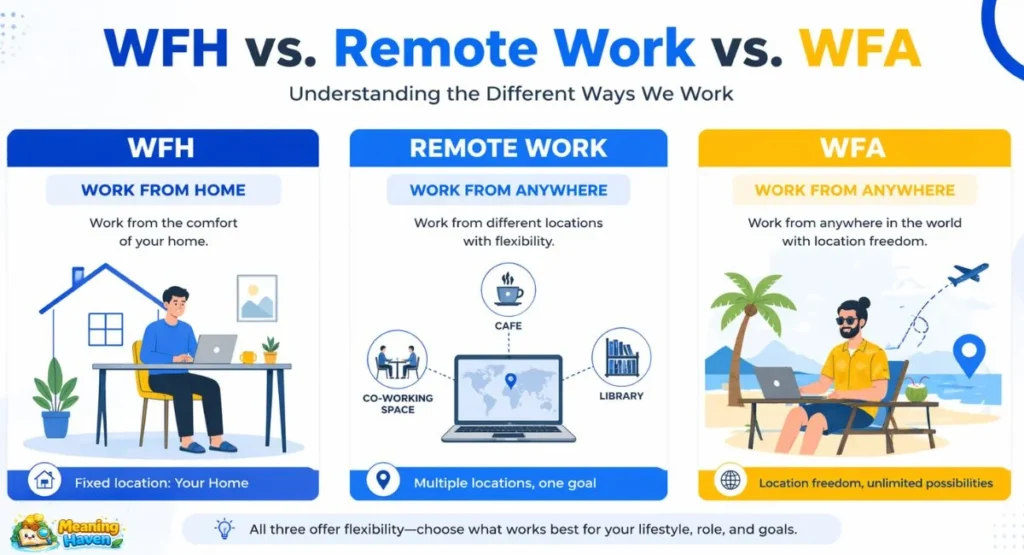
From my experience, people often use WFH and remote work interchangeably, but they are actually different when you look closely. Remote work is more flexible because it allows you to work from any location outside an office, whether that’s co-working spaces, coffee shops, libraries, or other locations. A remote job, for example, is not limited to your home, while WFH is more specifically about working from residence or working from one’s residence, meaning your employee’s residence becomes your main location instead of a traditional office. In simple terms, WFH is solely home-based, while remote work works more broadly across places.
Even though both arrangements rely on similar technology, communication tools, and management strategies, there are key differences in daily setup. WFH often needs dedicated home internet and non-portable accessories like an external webcam, docking station, and headset, while remote workers depend more on portable technology and mobile connectivity. From what I’ve seen, policy considerations also change — workspace setup, work-from-home tax deductions, and home office expenses may apply differently and sometimes may not apply outside home setups. On top of that, work hours can be structured around traditional business hours in WFH, while remote roles may include flexible time zones and asynchronous work, along with factors like travel restrictions, location requirements, and equipment security.
WFH Meaning vs WFA Meaning
In simple terms, WFA is an acronym for Work from anywhere, and it changes how a worker thinks about where they work. Instead of staying in one place like home, you can work from different locations such as a coffee shop, another company’s office, or any location that suits you. The key difference here is flexibility — you are not just their home or limited to an own personal house, but free to move between different locations depending on your needs. From what I’ve seen, this freedom feels very different compared to traditional setups tied to one office or fixed house.
On the other hand, WFH focuses more on staying in your personal house, the place where you live, and turning that space into your main work location. While both models share the same basic meaning of working outside a regular office, WFA gives more movement, while WFH stays rooted in one home environment. I’ve personally tried both, and the shift between a fixed house setup and flexible different locations really changes how you experience daily work.
| Feature | WFH | Remote Work | WFA |
|---|---|---|---|
| Meaning | Work from home only | Work outside a traditional office | Work from anywhere |
| Location | Usually employee’s home | Home, co-working space, café, or other places | Any location with full flexibility |
| Flexibility | Medium | High | Very high |
| Work setup | Fixed home setup | Flexible and portable | Highly mobile setup |
| Best for | People who prefer home-based work | People who want location flexibility | People who want maximum freedom |
Why Do People Choose WFH?
From what I’ve seen over time, the benefits of WFH are quite extensive, and that’s why so many employee choices are shifting. People now choose their own hours, manage their work without pressure, and won’t commute or deal with the daily commute to work, which means no commuting stress at all. There are no distractions from colleagues, and many even make a little money whilst working on side projects. For companies, having WFH employees means lower costs on office space and buildings, along with more productivity, less stress, and more diversity in the workforce due to added flexibility. I’ve read many posts explaining why this setup is better for employees, and honestly, after trying it myself, it makes sense why people are more open to this idea after a long time, especially as the work-from-home trend has recently made both workers and businesses more open-minded.
What really stands out is how a flexible workforce improves daily life — offering greater Work/Life Balance, more engagement with the company, and reduced stress levels that lead to high employee satisfaction and stronger loyalty. Interestingly, instead of a full reduction of 100% remote opportunities, some setups focus on allowing team members to meet each other in person through company-paid business trips, which keeps connection alive. With less pressure on individuals to put in hours, people can better concentrate on their role from their home office, helping to increase productivity while businesses decrease costs and cut back on workplace space, office equipment, and materials. Still, this trend doesn’t fit everyone — some find working from home unbearable, while others prefer it and don’t want an office anymore. In the end, giving people the freedom to work without restrictions often leads to a happier environment for both sides.
Benefits and Challenges of Working From Home
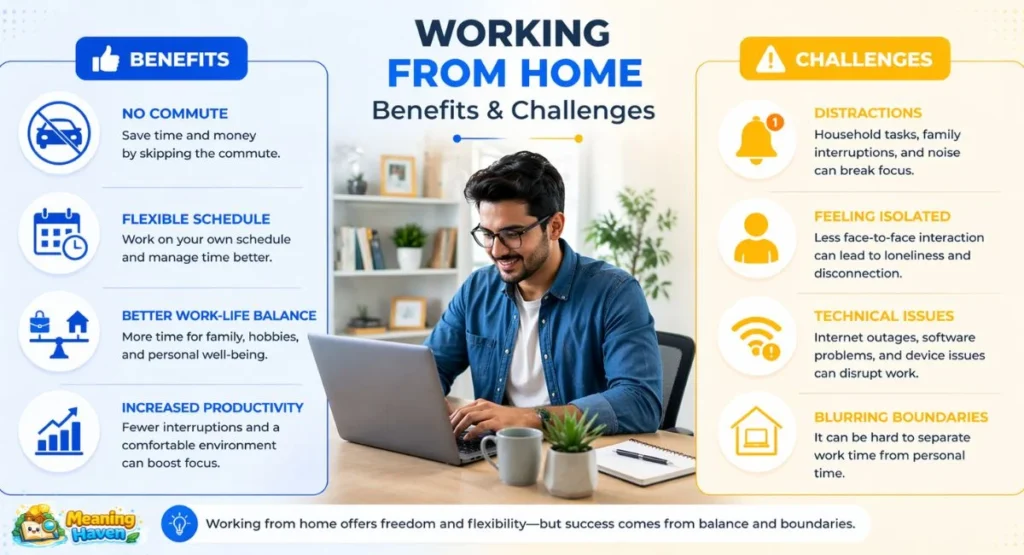
When I first started working from home, I quickly noticed some key benefits that made a big difference. For many employees, WFH brings a better work-life balance because there’s no daily commuting to the office, which means no commute time and lower transportation costs. This helps people get their work done quicker in a more focused environment, while also enjoying environmental benefits. As more people work from home frequently, they also rely on WFH tools to communicate while working remotely, and many professionals now explore new work-from-home opportunities that fit both their personal goals and professional goals.
At the same time, smart employers must weigh both advantages and drawbacks of this increasingly common arrangement. A clear understanding of the pros and cons helps shape better WFH careers. On the positive side, there’s improved work-life balance, scheduling flexibility, and possibly higher job satisfaction with better productivity. Businesses benefit too with reduced overhead costs and access to a broader talent pool, while workers enjoy greater autonomy and more control over work environment.
However, it’s not always perfect. Some people feel physically isolated from colleagues and team members, and many face struggles separating work and personal life. There can also be potential home distractions and interruptions, along with a higher risk of technology issues and connectivity issues. From a manager’s view, it can be difficult for managers to monitor daily performance, and it becomes harder to maintain team cohesion and strong culture.
| Benefits of WFH | Challenges of WFH |
|---|---|
| Better work-life balance | Feeling isolated from colleagues |
| No commute time | Home distractions and interruptions |
| More flexibility and autonomy | Difficulty separating work and personal life |
| Lower transportation costs | Technology or connectivity issues |
| Higher productivity in a focused setup | Harder to maintain team cohesion |
How to Create a Positive WFH Environment
From my own experience, one thing that’s really important is to create the right environment when working from home, especially if you’re used to an open-office space. A few practical tips can make a big difference when creating your perfect WFH office. Start by set up a dedicated area just for work, because mixing personal space with work can hurt your focus. I’ve found that using multimedia tools like music or simple apps can really boost creativity and improve your personal productivity. Also, having enough headspace, along with peace and quiet, will allow you to stay locked in on each work task with no distractions at all.
There are numerous reasons why this setup works so well for both employers and employees. The benefits include improved productivity, better staff engagement, increased focus, and even lower stress levels. It all comes down to flexibility while still getting the job done. If you follow a few top tips when making your routine, you’ll naturally build a more productive WFH environment without overcomplicating things.
WFH Setup Checklist
- ✅ Dedicated workspace
- ✅ Stable internet connection
- ✅ Comfortable desk and chair
- ✅ Clear daily schedule
- ✅ Fewer distractions
- ✅ Useful communication tools
- ✅ Boundaries between work and personal life
Are People Who WFH Happier and More Productive?
From what I’ve seen, many people who choose WFH do feel happier, and it’s not just a guess—they definitely seem happier in their daily routine. This shift is beneficial for both employers and employees, especially when you look at the real benefits like increased happiness, better satisfaction, and a healthier work/life balance. When you’re in your own space, it becomes easier to focus on certain tasks, leading to improved productivity and more engagement without the usual office pressure.
At the same time, staying productive at home depends on how well you manage your day. I’ve personally noticed that when you keep busy throughout the day, you avoid feeling bored or distracted, which makes a big difference in output. Simple things like using multimedia tools can really play a role in keeping energy levels up while working. When done right, this setup naturally leads to both better results and a more positive mindset for anyone working remotely.
WFH Trends and Statistics
Looking at the numbers, the shift is hard to ignore. Between 2007-2011, there was a 57% increase in people working from home, and this WFH trend has been steadily increasing over the past few years. Today, many companies, employees, and employers rely on recent statistics to understand this change. For example, around 25% of millennials now work from home at least once per week, compared to just 20% in 2013. From what I’ve seen, businesses are becoming more increasingly open-minded, allowing flexible hours so teams can enjoy a better work/life balance, which many organizations now see as highly valuable.
What’s even more interesting is how this shift is shaping the future of work. A less stressed workforce is now a priority, so companies allow staff members more freedom when working remotely under a Remote First ethos. This trend increase shows that businesses are thinking outside the box, exploring new potentials where people can work remotely from their home office. In my experience, this approach just makes sense — it helps reduce stress levels, increase productivity, and improve overall efficiency. Both sides benefit from flexible working hours, where you can easily switch off after your commute and separate your work office environment from personal life.
Other Related Work Acronyms
Beyond WFH and WFA, there are several other acronyms you should know because they are becoming more common in the workplace. These include terms like WFHW, where workers work from their home once a week for a whole day, and WFHWTW, which means doing the same twice a week. Another one is WFBH, where you get 1 full day of working at home each week. I’ve noticed these small variations are often shared in team policies, and if you’re lucky enough to be given these terms, it usually means your company is offering more flexibility.
From my experience, these setups give an extra amount of freedom because you’re able to choose when you want to work while still staying connected to your team. Even though they all relate back to WFH, each option creates a slightly different routine depending on how often you’re at home versus elsewhere.
FAQs About WFH Meaning
What is WFH meaning in 2026?
WFH means Work From Home, where employees do their jobs from their home instead of going to an office. In 2026, it is more flexible than before and often part of hybrid or remote work setups.
Has WFH changed since the pandemic?
Yes, WFH has changed a lot since the pandemic. Earlier, it was temporary, but now it is a normal work style. Many companies offer long-term or hybrid options.
What is the difference between WFH and WFA?
WFH means working only from home, while WFA (Work From Anywhere) allows people to work from different places like cafes, offices, or even while traveling.
Is WFH still popular?
Yes, WFH is still popular. Many companies and employees prefer it because it saves time, reduces stress, and offers flexibility.
Does understanding WFH matter for employees?
Yes, understanding WFH helps employees choose the right work style, manage their time better, and improve productivity and work-life balance
Conclusion
Now that you know what the WFH abbreviation means, it’s clear why this trend is becoming more popular with both employees and employers. From what I’ve seen, the real value comes from the current benefits it offers when people can work effectively in the right environment. It’s not just about staying at home—it’s about finding a balance between work life and personal life, which can take time to adjust, but once you do, you start to reap the rewards.
In my experience, being productive while working remotely isn’t about working harder, it’s about learning to work smarter so you feel truly fulfilled in both your home life and career. That small shift in mindset makes a big difference, and once it clicks—Woohoo—you start to enjoy the flexibility and control that WFH brings.

Welcome to Meaning Haven, I’m Muhammad Talha, a content writer and SEO specialist passionate about simplifying word meanings and modern language.
I help readers understand meanings, explore trending slang, and communicate with clarity. My goal is to make language easy, relatable, and useful for everyone.
Let’s explore meanings together!
2 thoughts on “WFH Meaning Explained: What WFH Means, How It Works, and How It Compares to Remote Work”